-
English
- 4449454
- info@mayaestetik.com
- Etiler Nisbetiye, Başlık Sk. No:3/1 Beşiktaş/İstanbul/Turkey
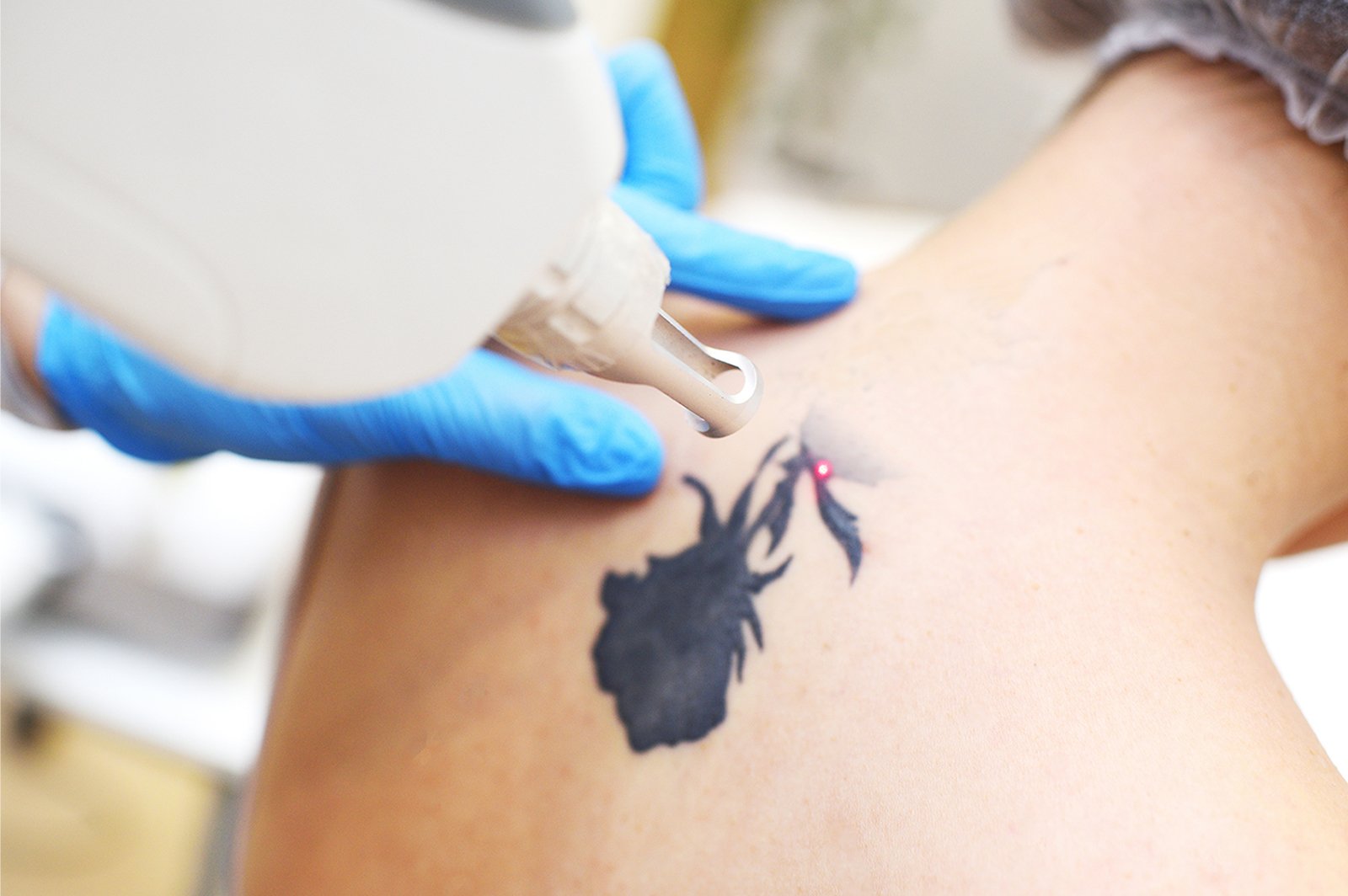
Laser tattoo removal uses very short laser pulses to break tattoo ink into small particles that the body then clears naturally. A pico laser delivers energy in picoseconds (trillionths of a second), breaking the ink into even smaller particles. Depending on the colour, depth and age of the tattoo, several sessions are usually needed, typically 6–8 weeks apart; amateur tattoos often clear in fewer sessions.
At Maya Estetik, tattoo removal is carried out with a pico laser at our Etiler clinic in Istanbul after a physician's assessment. At the first visit, the tattoo's colours, age, location and your skin type are examined, and you are given a realistic range of sessions and expectations. Removal of permanent make-up (eyebrows, lips, eyeliner) can be planned with the same assessment.
| Topic | Details |
|---|---|
| Session time | 5–30 minutes depending on tattoo size |
| Interval between sessions | Usually 6–8 weeks |
| Amateur tattoo | Often 3–6 sessions |
| Professional and coloured tattoo | Often 6–12 sessions or more |
| Healing | Redness and crusting for 1–2 weeks |
| Back to daily life | Same day (with the area protected) |
Tattoo ink sits deep in the skin in particles too large for the body to clear on its own. The laser light is absorbed by these particles and shatters them. The smaller particles are then removed through the lymphatic system by immune cells over the following weeks. This is why a tattoo keeps fading between sessions.
Pico lasers use far shorter pulses than conventional nanosecond (Q-switched) lasers. The ink is broken into smaller fragments mainly by a pressure effect rather than heat, which can give more efficient results, particularly with difficult colours such as blue and green.
| Pico laser | Q-switched (nanosecond) laser | |
|---|---|---|
| Pulse duration | Picoseconds | Nanoseconds (about 1,000 times longer) |
| Ink particles | Smaller | Larger |
| Difficult colours (blue, green) | More efficient | More limited |
| Heat to surrounding tissue | Less | More |
Although many tattoos can be removed completely or faded significantly, the exact number of sessions and the final result cannot be predicted with certainty, and no guarantee should be given.
Redness, swelling, pinpoint bleeding, crusting and sometimes blistering are expected after treatment and resolve within 1–2 weeks. Temporary lightening (hypopigmentation) or darkening (hyperpigmentation) of the skin may occur. White, skin-tone or pink inks can darken with laser, so a test pulse is done first for these colours. Scarring is rare but may occur if the healing process is not cared for properly.
Contact your physician: Call the clinic if you notice signs of infection such as increasing pain, warmth, pus or fever in the treated area.
The cost depends on the size and colours of the tattoo and the number of sessions required. Under Turkish Ministry of Health regulations, prices for healthcare services are not published on websites. Personalised information is provided after your assessment.
Amateur tattoos usually need 3–6 sessions; professional and coloured tattoos 6–12 or more. The exact number depends on colour, depth, age of the tattoo, location and skin type.
Permanent scarring is rare when the right settings are used and aftercare advice is followed. Temporary colour changes may occur and improve over time. Picking crusts increases the risk of scarring.
It feels like a rubber band snapping against the skin. With numbing cream and cooling, the procedure is well tolerated by most people.
Usually 6–8 weeks. This time is needed for the body to clear the broken-down ink and for the skin to heal; more frequent sessions do not speed up the process and can damage the skin.
With a pico laser, colours such as blue and green can give better results than with conventional lasers. Yellow, orange and white are more difficult and may not clear completely.
Yes, most permanent make-up can be removed with laser. However, make-up containing skin-tone or white pigment can darken, so a test pulse is done first.
The tattoo should be fully healed first; at least 6–8 weeks is usually recommended.
Yes. Fading a tattoo with a few sessions gives the tattoo artist more design freedom for a cover-up.
Let's plan the right treatment for you at your consultation. For questions and appointments, message us on WhatsApp or call us.
WhatsApp: +90 532 301 99 52 · Phone (within Turkey): 444 9 454 · Maya Estetik Etiler, Istanbul · Directions
Medical review: This page has been reviewed by Dr. Nihat Dik, founding physician of Maya Estetik. Dr. Dik graduated from Istanbul University, Istanbul Faculty of Medicine in 1997, trained in medical aesthetics in Germany and has been performing medical aesthetic treatments at Maya Estetik since 2004.
This page is for general information and does not replace a medical consultation. The right treatment for you is decided by a physician after examination.